Call for papers: “Horizons for traditional, complementary, and integrative medicine in the 21st century”
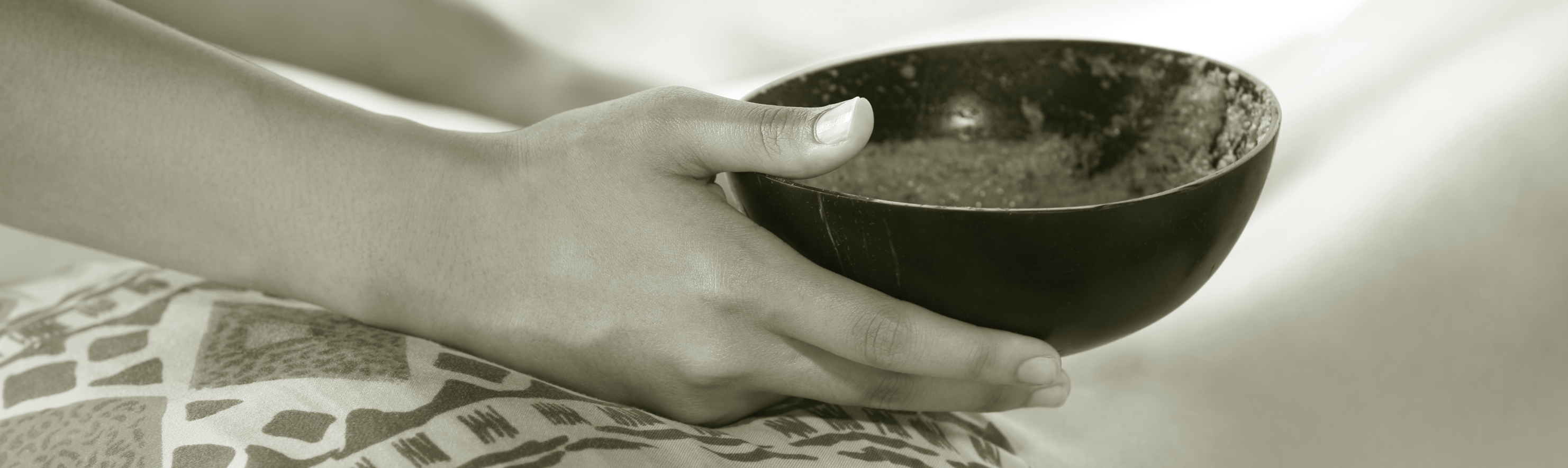
Fhoto: Sansara | Last update: 12/07/2025
Fundamentals of the call
In recent years, the coexistence and validation of different medical paradigms has assumed a central role in global health policy. Traditional, Complementary, and Integrative Medicines (TCIM), as defined by the World Health Organization (WHO), encompass systems and practices that, rooted in diverse historical and cultural contexts, have progressively evolved and become integrated into contemporary health systems.
The new WHO Strategy on TCIM (2025–2034) outlines a vision aimed at ensuring universal access to safe, effective, and people-centered services and products, promoting the contribution of TCIM to the highest attainable standard of health and well-being. This strategic framework supports the integration of traditional, complementary, and biomedical practices guided by principles of scientific evidence, holistic approaches, health equity, respect for cultural diversity and Indigenous Peoples’ rights, and the promotion of integrated and sustainable services.
This debate takes on particular relevance in Latin America and the Caribbean, a region marked by rich cultural diversity, including Indigenous and Afro-descendant traditional medicines, and the growing adoption of complementary therapies. Integrating these approaches into health systems—safely, ethically, and within regulatory frameworks—presents an urgent challenge that demands intercultural policies, effective regulatory mechanisms, and dialogue among knowledge systems.
The traditional medicines of Indigenous Peoples and other ethnic groups hold a central place within this landscape. These practices, deeply embedded in ancestral worldviews, represent not only therapeutic and caregiving approaches but also knowledge systems that intertwine health, territory, spirituality, and community. In many settings, such medicines serve as the first or only resource for health care, especially in rural or hard-to-reach areas. Their recognition, respect, and integration into public policies require an intercultural perspective that fosters knowledge dialogue and protects the collective rights of Indigenous Peoples.
At the same time, various groups and communities around the world continue to enrich this body of knowledge by developing and documenting therapeutic practices and healing experiences holistically embedded in their worldviews. Therapeutic-level integration and the systematic articulation of diverse medical paradigms present a challenge that necessitates the involvement of multiple actors and voices.
Within this context, Salud Colectiva invites the submission of original articles, reviews, essays, and experience-based contributions addressing the following topics, among others:
- Integration of TCIM into official health systems: progress, challenges, and lessons learned.
- Scientific evidence and regulatory frameworks: methodologies, findings, and gaps in the validation of safety and efficacy.
- Training and professional recognition: regulation of TCIM specialists and protection of traditional knowledge.
- Rights of Indigenous Peoples and intercultural dialogue in the implementation of TCIM.
- Innovation and digital technologies in TCIM research and practice.
- Local and regional experiences of integration, complementarity, and co-construction of public policies.
Submissions may address, among other questions:
- How are TCIM articulated within official health systems?
- How are TCIM practitioners recognized and regulated?
- How does interaction among different actors and sectors in the health field occur in relation to TCIM?
- What local experiences of integration or complementarity can be documented?
This special issue aims to open a critical and pluralistic space for reflection on the role of TCIM in transforming 21st-century health systems, and their contribution to equity, sustainability, and resilience in the face of global challenges such as climate change and biodiversity loss.
The call will be coordinated by a team of guest editors:
- Nelson Filice de Barros — Social scientist and coordinator of the Laboratory of Alternative, Complementary, and Integrative Health Practices (LAPACIS), based at the Universidade Estadual de Campinas (UNICAMP). His research focuses on TCIM in dialogue with cultural studies, health sociology, and qualitative methods. Consultant to the World Health Organization (WHO) on matters related to traditional, complementary, and integrative medicine.
- João Paulo Souza — Specialist in health promotion and maternal health. He coordinates initiatives aimed at integrating TCIM into health systems, fostering dialogue between traditional knowledge and conventional science. He currently serves as Director of the Latin American and Caribbean Center on Health Sciences Information (BIREME/PAHO/WHO).
- Vanina Andrea Papalini — Researcher with the Consejo Nacional de Investigaciones Científicas y Técnicas (CONICET), based at the Universidad Nacional de Córdoba (Argentina). She specializes in traditional, complementary, and alternative medicines (TCIM), with a focus on medical pluralism, epistemology, and the sociology of culture. Her work addresses issues related to well-being, intercultural health, and alternative medical practices in Latin America.
- Natalia Sofía Aldana Martínez — Public health physician and TCIM specialist. She coordinates the TCIM Americas Network, a collaborative initiative that brings together diverse actors to promote the integration of TCIM into health systems and services across the Americas. She also serves as General Editor of the TCIM Americas VHL at BIREME/PAHO/WHO, a platform that, through networked collaboration, facilitates knowledge access and management to strengthen TCIM integration toward Universal Health.
Submission of original articles
Works must be original and unpublished and written in Spanish, English or Portuguese. As of 2019, the journal accepts works previously deposited in the preprint platforms SocArXiv, bioRxiv, arXiv, PsyArXiv or SciELO Preprints. All manuscripts will be subject to a preliminary review to determine whether the article meets the goals, editorial policies and standards of the journal. If the article is deemed eligible in this pre-evaluation, the authors will be notified and the peer review process will commence. Regardless of the submission language, works accepted will be published in Spanish or bilingually in both English and Spanish [see Submission and publication languages]. The journal covers the costs of editing, publishing and distribution, and authors must cover the costs of translation.
All submissions must include the four files listed below, which should be submitted via our institutional platform. For more details, see “How to submit your paper." The basic formal requirements are as follows:
File 1: Authorship page
- Reference to the call for papers “Horizons for Traditional, Complementary, and Integrative Medicines in the 21st Century”
- Authorship information: first and last names for each author; last academic degree earned; current position and institution; country; e-mail address, ORCiD code.
- Acknowledgements: names of the institutions and/or persons to be thanked for their contributions (excluding financial contributions).
- Funding: If a grant or funds have been provided to finance the research, the cover page must include the name of the funding agency and the research approval number or code.
- Conflict of interests: The mention of a conflict of interest does not imply the rejection of the article. Any real or potential conflict of interest, any obligations on the part of the author/s with regards to sources of funding, or any other type of relationship or rivalry that may be deemed to create a conflict of interest must be explained.
- Author contribution: In accordance with the CRediT – Contributor Roles Taxonomy, the cover page must describe the contribution made by each author [ver Authorship].
File 2: Article anonymised
- Reference to the call for papers “Horizons for Traditional, Complementary, and Integrative Medicines in the 21st Century”
- Title of article: in both Spanish and English.
- Article abstract: no more than 12 lines written in a single paragraph without structuring titles, in Spanish and English.
- Keywords: 3-5 Medical Subject Headings (MeSH) or Health Science Descriptors (DeCS), using the option “DeCS search".
- Suggested maximum length: 7,000 words (not including abstract, references and tables or figures).
- Submission languages: texts must be submitted in Spanish. Authors who are not Spanish-speaking may submit works in Portuguese or English. If they are accepted, they will be published in Spanish or bilingually in both Spanish and English. The journal will cover editing, publishing, and distribution costs, and authors must cover the cost of translation.
- Endnotes and footnotes: Due to the new electronic editing process, neither endnotes nor footnotes may be included. All necessary clarifications must be provided throughout the text.
- Quotation: If the article contains quotations of texts published in other languages, the quotation must be translated into the submission language and the original quotation must be also included.
- Figures and tables: No more than seven tables and/or figures will be accepted. They must be submitted within the same file as the text, at the end of the text, and must include the following: 1) Consecutive numbering (tables and figures must be numbered independently, in series according to their designation). 2) A descriptive title specifying the geographic and temporal dimensions of the data presented. 3) The source of the data used.
- Data deposit: Research teams must ensure the availability of research data and, in the event that the article is accepted, must deposit the dataset in SciELO Data [see Data Deposit Policy].
- Research Ethics: If the research has been carried out using human subjects (including ethnographies using in-depth interviews or any other type of research in which people participate), the text must contain (in the Methodology section) an explanation of the informed consent obtained from participants and the approval of research protocol by the relevant Ethics Committee.
- References: Correlative numbering system (Vancouver) based on the style of theNational Library of Medicine. Maximum: 100 references.
File 3: Conflict of interest and ethical aspects, originality and publication rights
The Declarations of Ethical Aspects, Conflicts of Interest, Originality and Publication Rights must be downloaded, filled out and included as Supplementary Files in Step 2 "Upload Submission" of the submission process. [Download Declaration CIEA-OPR].
File 4: REC approval statement
Research involving human subjects (including ethnographic studies, in-depth interviews, semi-structured interviews, focus groups, surveys, or any other type of research involving human subjects) must upload the approval statement from the research ethics committee (REC) in PDF format. In the case of epidemiological studies with secondary data, theoretical essays, review articles, or documentary analysis, it is not necessary to add file 4.
Additional information
Article processing charge (APC): Salud Colectiva does not charge for editorial processing of articles. All editing, publishing and distribution costs are funded by the Instituto de Salud Colectiva of the Universidad Nacional de Lanús. In the case of non-Spanish-speaking authors submitting manuscripts in Portuguese or English, if the work is accepted, it will be published either in Spanish or in a bilingual Spanish-English format. In such cases, the journal will cover the costs of copyediting, editing, and distribution. Authors will only be responsible for the translation costs.
Open Access policy: Salud Colectiva ratifies the Open Access model in which scientific publications are made freely available in full text online, with no embargo periods and with no publication costs falling on the authors. Authors are offered full access to the final published versions so as to include them in institutional repositories. All of the material included in Salud Colectiva is published under a Attribution 4.0 International (CC BY 4.0).
Submission period
Given that the thematic issue has guest editors from different countries, a specific timeframe is proposed for article submission. Thus, articles may be submitted for evaluation from March 1, 2026 to March 31, 2026.
Submission deadline | March 31, 2026
Web of Science | Scopus | PubMed Central | Europe PMC | SciELO Salud Pública | Pubmed-Medline | DOAJ | ERIH PLUS | Redalyc | Dialnet
Facebook | Twitter | Linkedin
For more information: revistasaludcolectiva@gmail.com
Salud Colectiva | ISSN 1669-2381 | E-ISSN 1851-8265
Universidad Nacional de Lanús | Instituto de Salud Colectiva
Buenos Aires, Argentina


ISSN 1669-2381 (print version) | ISSN 1851-8265 (electronic version) | 2250-5334 (english edition)
Editor in chief: Viviana Martinovich
Publisher: Universidad Nacional de Lanús
Rector: Daniel Rodriguez Bozzani
29 de Septiembre 3901, Remedios de Escalada, Lanús (B1826GLC), Provincia de Buenos Aires, Argentina